

WASHINGTON (AP) — The Supreme Court took up one of the term’s most consequential cases, President Donald Trump’s executive order on birthright citizenship declaring that children born to parents who are in the United States illegally or temporarily are not American citizens.
In arguments Wednesday, the justices heard Trump’s appeal of a lower-court ruling from New Hampshire that struck down the citizenship restrictions, one of several courts that have blocked them.
Justices asked about the legal basis for the order and voiced more practical concerns.
“Is this happening in the delivery room?” Justice Ketanji Brown Jackson asked, drilling down into the logistics of how the government would actually figure out who is entitled to citizenship and who is not.
Chief Justice John Roberts suggested that the administration’s top Supreme Court lawyer, Solicitor General D. John Sauer, was relying on quirky exceptions to citizenship to make a broad argument about people who are in the country illegally. “I’m not quite sure how you can get to that big group from such tiny and sort of idiosyncratic examples,” Roberts said.
Justice Clarence Thomas sounded the most likely among the nine justices to side with Trump.
A definitive ruling is expected by early summer.
Immigrant leaders in Chicago say they are anxious about the case and what the outcome could mean for families across the country.
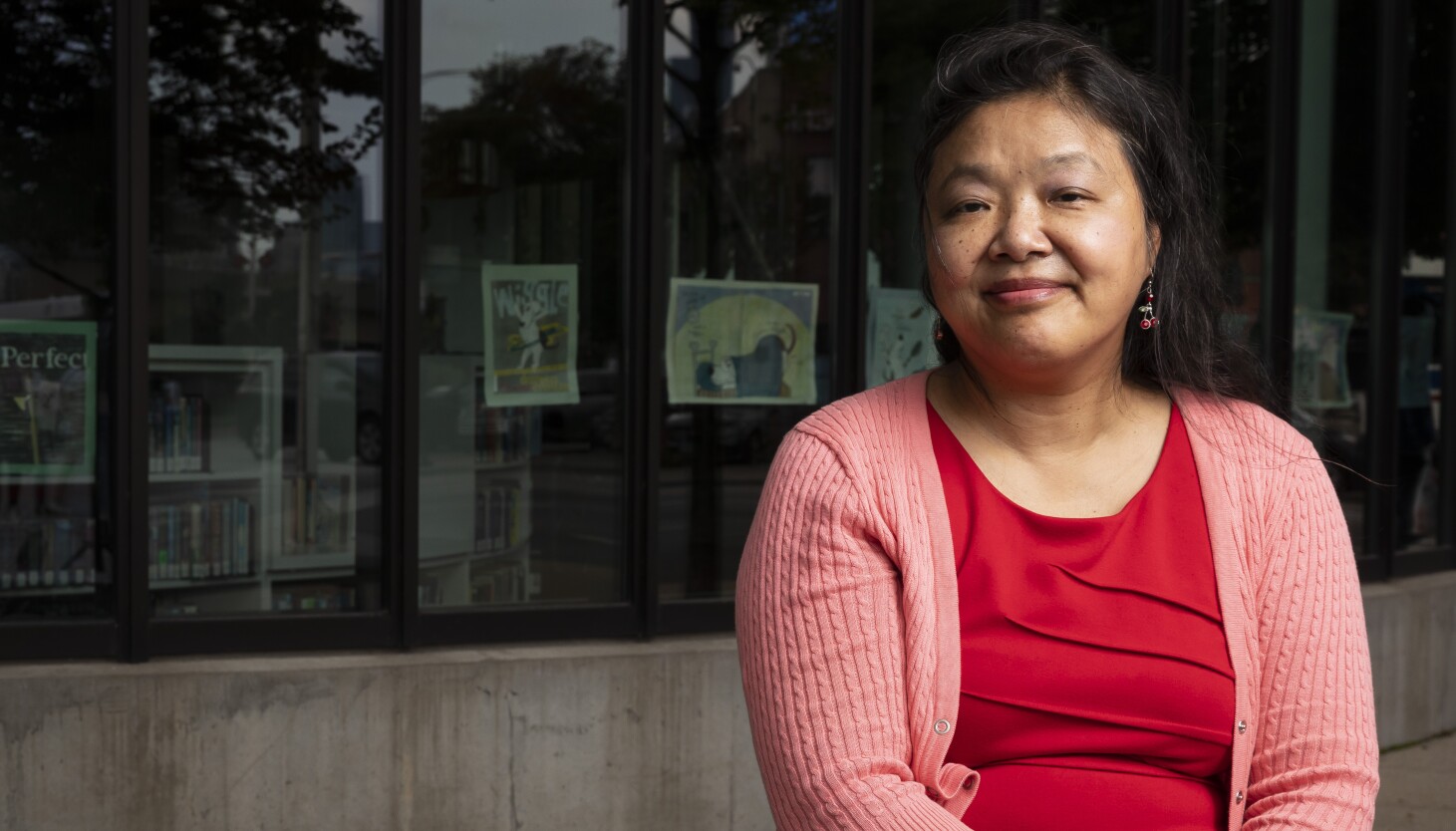
“We feel like there’s this constant attack [on immigrants],” said Grace Chan McKibben, executive director of the Coalition for a Better Chinese American Community.
She worries that children of immigrants could risk losing benefits like healthcare or access to schools and other resources.
“Certainly a lot of the programs that we have are open to both citizens and green card holders, permanent residents, but it is not clear if we rescind birthright citizenship to the children, whether they would have any status at all,” she said.
Trump was the first sitting president to attend oral arguments at the nation’s highest court.
Ana Gil Garcia, who chairs the board of the Illinois Venezuelan Alliance, said that Trump’s presence in the courtroom was designed to send a strong message to the judges he appointed.
“The presence of the president with his wife, who is an immigrant, in the court today, is an intimidation element,” Garcia said.
The case frames another test of Trump’s assertions of executive power that defy long-standing precedent for a court that has largely ruled in the president’s favor — but with some notable exceptions that Trump has responded to with starkly personal criticisms of the justices.
Trump’s order would upend the long-standing view that the Constitution’s 14th Amendment, ratified in 1868, and federal law since 1940 confer citizenship on everyone born on American soil, with narrow exceptions for the children of foreign diplomats and those born to a foreign occupying force. The 14th Amendment was intended to ensure that Black people, including former slaves, had citizenship, though the Citizenship Clause is written more broadly. “All persons born or naturalized in the United States, and subject to the jurisdiction thereof, are citizens of the United States and of the State wherein they reside,” it reads.
In a series of decisions, lower courts have struck down the executive order as illegal, or likely so, under the Constitution and federal law. The decisions have invoked the high court’s 1898 ruling in Wong Kim Ark, which held that the U.S.-born child of Chinese nationals was a citizen.
The Trump administration argues that the common view of citizenship is wrong, asserting that children of noncitizens are not “subject to the jurisdiction” of the United States and therefore are not entitled to citizenship. The court should use the case to set straight “long-enduring misconceptions about the Constitution’s meaning,” Solicitor General D. John Sauer wrote. No court has accepted that argument, and lawyers for pregnant women whose children would be affected by the order said the Supreme Court should not be the first to do so. “We have the president of the United States trying to radically reinterpret the definition of American citizenship,” said Cecillia Wang, the American Civil Liberties Union legal director who is facing off against Sauer at the Supreme Court.
More than one-quarter of a million babies born in the U.S. each year would be affected by the executive order, according to research by the Migration Policy Institute and Pennsylvania State University’s Population Research Institute.
Garcia says that the Trump administration’s argument that pregnant women are coming to the U.S. to take advantage of birthright citizenship is unjust and doesn’t speak to the real reasons that Venezuelan immigrants migrate to the United States.
“The immigrant families came escaping from poverty, from violence, from inhumane living conditions, from terrorism,” Garcia said.
Denying citizenship to children born from Venezuelans who lack legal status will create a second class of stateless children, she added.
“They will not be from here, they will not be from there,” Garcia said. “They will not be from anywhere.”

