

The United States and Iran may no longer be in active conflict, having established and then extended a cease-fire in their weekslong war, but the list of economic disruptions and industrial shortages continues to grow—oil, natural gas, jet fuel, tungsten, sulfur, fertilizer.
Adding to that list is an often overlooked, but no less important, industrial input: helium.
The United States and Iran may no longer be in active conflict, having established and then extended a cease-fire in their weekslong war, but the list of economic disruptions and industrial shortages continues to grow—oil, natural gas, jet fuel, tungsten, sulfur, fertilizer.
Adding to that list is an often overlooked, but no less important, industrial input: helium.
You may know helium as the gas that keeps party balloons afloat and pumps voices to new heights, but the gas has farther-reaching impacts than that. Colorless and lighter than air, helium is also a vital ingredient in many of the world’s most powerful technologies, underpinning semiconductors, medical equipment, and more.
If “you think about semiconductors, fiber optics, or anything using superconducting magnets, the consequences of not having helium are gigantic in an economic sense,” said Nicholas Snyder, the CEO of North American Helium, which currently produces more than 7 percent of the helium supply in North America. “If you think about medical applications like MRI, there [are] huge consequences there as well.”
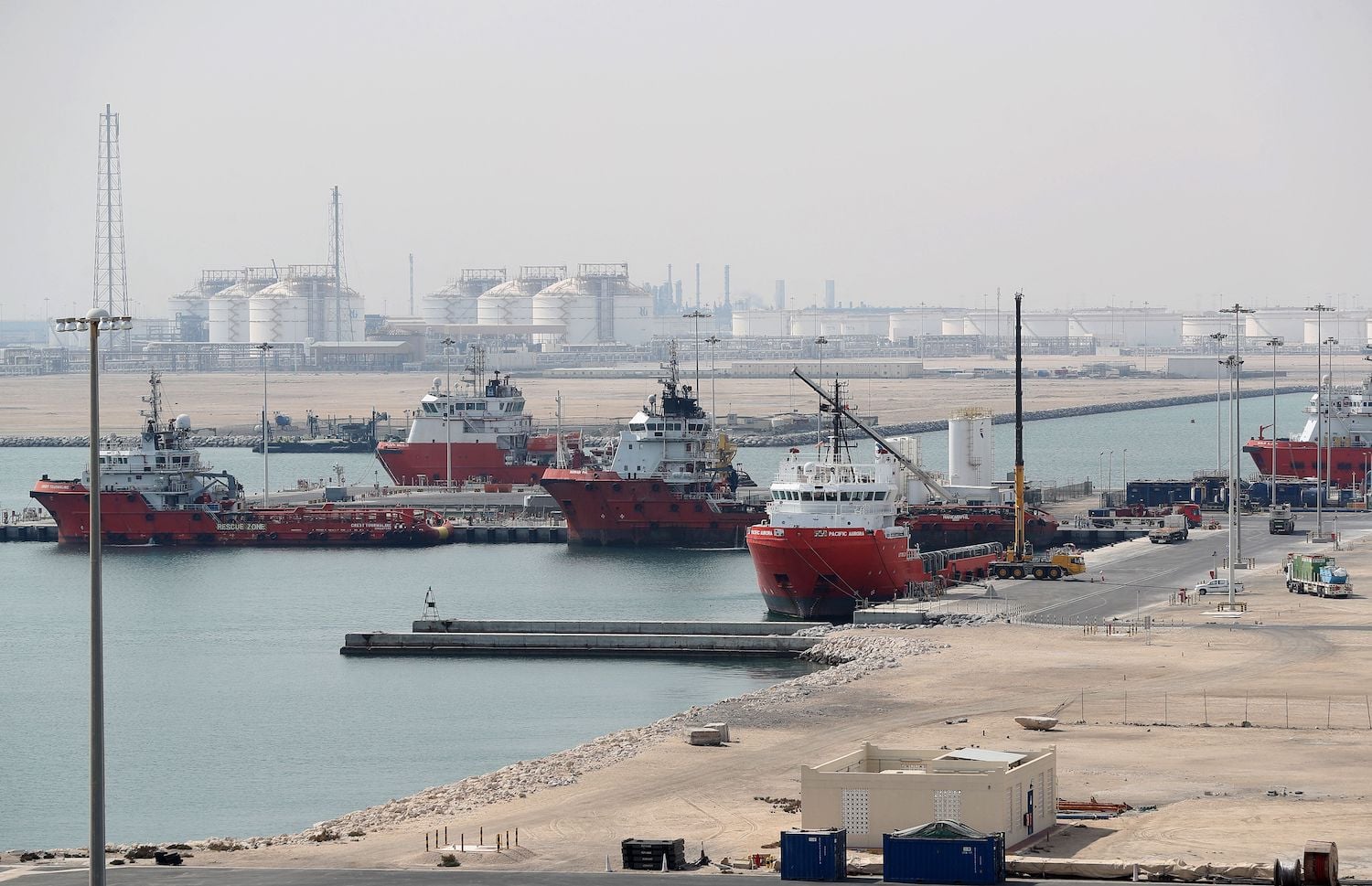
Weeks of war in the Middle East and attacks on energy infrastructure have dealt a painful shock to the global trade of helium, which is primarily extracted as a byproduct of natural gas production. As the world’s second-biggest producer of liquefied natural gas (LNG), Qatar in particular is a major helium hub, accounting for about one-third of global helium supply before the war erupted.
That changed after Iran attacked Qatar’s Ras Laffan facility—the biggest LNG plant in the world—prompting the state-owned QatarEnergy to halt production, declare force majeure, and slash its annual helium exports by 14 percent.
Exports are also having trouble leaving the region: Most of Qatar’s helium exports normally transit the Strait of Hormuz, the vital maritime chokepoint that has been effectively strangled by the war.
The turmoil has already spiked helium prices, with spot prices reportedly doubling last month. But since the commodity is mostly traded through long-term contracts—and the global transportation of helium containers entails a longer lag time—more pain could be on the horizon.
This is a “belated wake-up call in the helium world,” said Snyder, particularly for places such as South Korea and Taiwan, he said, which were getting the majority of their helium from one source in the Middle East.
For a commodity so vital to key technologies, helium has unique physical properties that can make it challenging for governments to stockpile or store it over lengthy periods of time. It can only be shipped internationally as a liquid at 4 degrees Kelvin, said Snyder, who described the gas as a “perishable” commodity. “There’s not deliverable storage around the world that can easily fix this problem,” he said.
The United States is a major helium powerhouse. In fact, it’s the world’s largest producer of helium, accounting for 43 percent of global production in 2025, according to data from the U.S. Geological Survey.
The U.S. government recognized the importance of helium to industrial and defense applications as far back as 1925, when it passed the Helium Act to govern production of the gas and establish a federal strategic helium reserve near Amarillo, Texas. That was then expanded during the Cold War in 1960, given helium’s use in missiles and rockets. But that posture changed in 1996, when the government ordered the privatization of the strategic reserve.
Congress’s reasoning at the time was that having a large government-owned helium stockpile in the United States was expensive and keeping prices of the gas “abnormally low,” according to Patrick Wilson, the founding principal of the Semiconductor & Innovation Group, a consulting firm in Washington. Wilson previously served as a Commerce Department official during the first Trump administration and earlier as an executive at the Semiconductor Industry Association, where he worked on the 2013 Helium Stewardship Act that slowed the privatization of the helium stockpile amid fears of a supply crunch. That legislation’s 2021 deadline to sell the stockpile was further extended during the COVID-19 pandemic before being finalized in 2024.
“All these tanks are super expensive to maintain … so it was a big storm of governments getting out of the business,” Wilson said. “Now, the government basically has no strategic reserve anymore.”
Today, with the threat looming of a supply crisis that the erstwhile strategic reserve was designed to prevent, some are calling for the reserve to be brought back. “What remains is a private system serving commercial needs, not a public instrument designed to insure against severe national or global disruption,” Robert Z. Lawrence of the Peterson Institute for International Economics wrote this week. Helium “is not just another commodity,” he added. “The social costs of failure to hold adequate inventories are far greater than the private costs.”
Similar demands are also being made on the other side of the world, with the Taiwan Semiconductor Industry Association calling on the Taiwanese government this month to “increase strategic reserves of helium and natural gas.”
Semiconductor chips have become the lifeblood of the global economy over the past decade, powering much of the technology that underpins our daily lives as well as advanced applications including missiles, artificial intelligence models, data centers, and quantum computing.
And none of it works without helium. The gas is a key material in multiple steps of the chipmaking process, from cooling the magnets used to keep the silicon wafers stable so that the electronic patterns that make them tick can be etched onto them to being used to pump out potential contaminants from the chipmaking environment. Chipmakers “not only need a lot of it, but they need it all the time,” Wilson said.
That demand is only set to increase as semiconductors become more advanced and more indispensable. A 2024 report by the market research firm IDTechEx predicted that the global semiconductor industry’s demand for helium would increase by more than fivefold over the next decade. It also has big implications for the AI data center boom that Gulf countries such as Qatar have spent billions of dollars on.
“The AI economy runs on tokens, tokens run on GPUs, and GPUs depend on Qatari helium, Israeli bromine, and LNG tankers with a single, 21-mile-wide exit from the Persian Gulf,” David Pan, the AI industry practice lead at the financial services company Moody’s, wrote in an emailed statement to the press.
And despite the cease-fire that has largely held so far—thus pausing Iranian strikes on Qatar and other Gulf countries—the Strait of Hormuz remains closed due to overlapping U.S. and Iranian blockades. “If the cease-fire holds and if this moves toward a more isolated Iran-but-not-neighbors-involved conflict, I would imagine that [helium] production can restart relatively quickly—but if they can’t get it out of the region, it doesn’t matter,” said Bettina Weiss, the chief of staff and corporate strategy at SEMI, a semiconductor industry supply chain association with more than 3,000 members globally. “Even if the strait opened today, it would take an estimated four to six months to normalize supply,” she added. “So this is not something where we said, ‘OK, conflict is over, Qatar is back on, off we go.’ It takes a lot of time for these things to rebalance themselves.”
In the meantime, Weiss and Wilson pointed out that costs for the chip industry will continue to rise—not just of helium but also other inputs, exacerbated by shipping delays—potentially creating a snowball effect for the global economy.
“This is a great example of how vulnerable the microelectronics industry is to driving up the cost of everything else,” Wilson added.

