

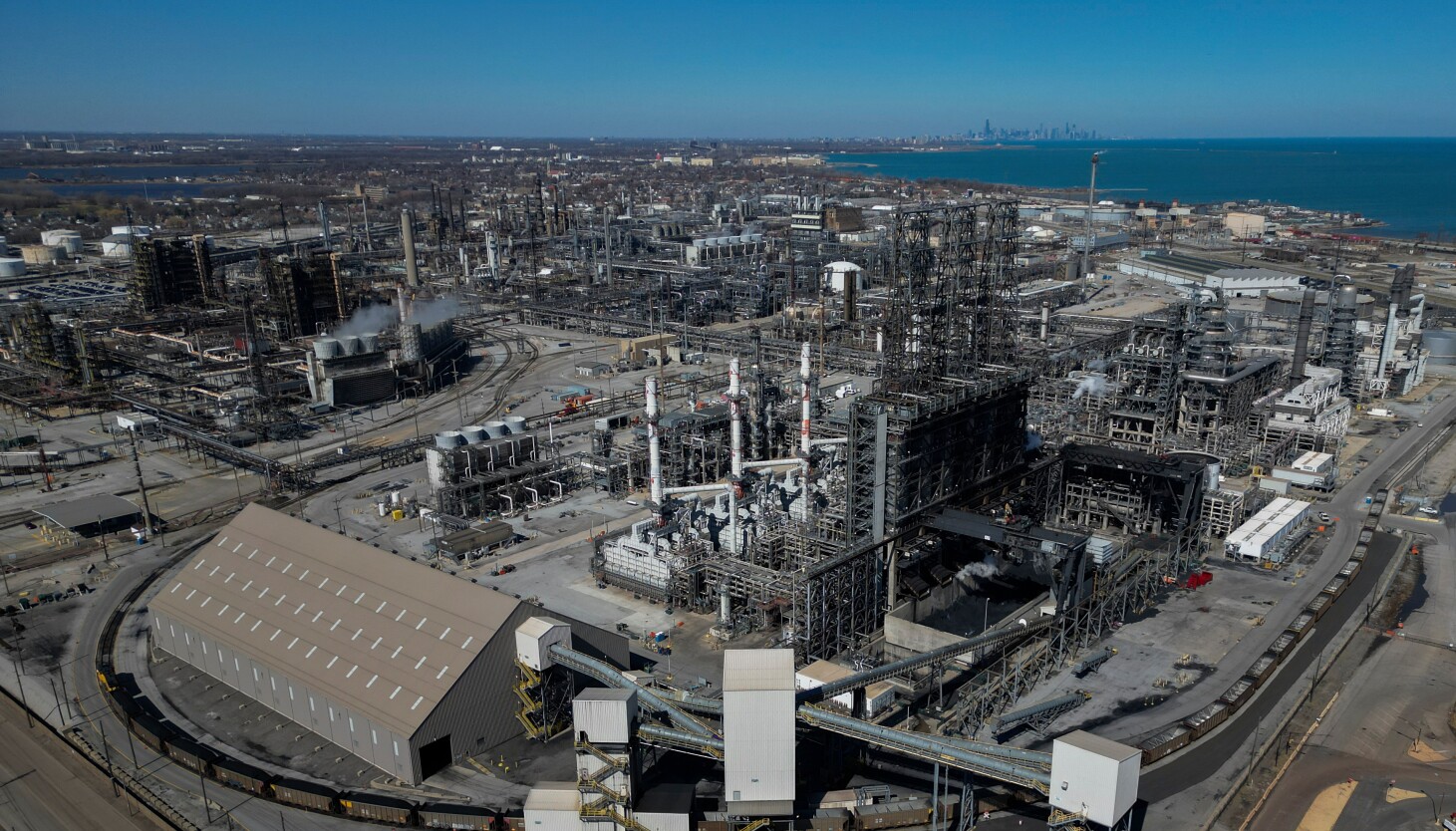
Energy giant BP locked out more than 800 union workers on Thursday at its refinery in Whiting, Indiana — the largest inland refinery in the U.S.
The lockout comes after BP and the workers’ union, United Steelworkers Local 7-1, failed to reach a contract agreement on Tuesday.
“We presented British Petroleum with an offer [Tuesday] that included accepting several of their proposals — only for them to reject that after just four hours and serve us with a lockout notice,” Eric Schultz, president of USW Local 7-1, said on Tuesday. “They continue to demand that we cut more than 100 jobs, accept pay cuts to nearly all positions and give up our bargaining rights.”
Contract negotiations started earlier this year, after the current contract expired Jan. 31.
“The decision to lockout was not made lightly,” BP said in a Tuesday statement. “It was made after months of negotiations and great consideration. However, the union has not accepted the company’s contract proposals that are most critical to the long-term sustainability of the refinery. In fact, the union has unequivocally rejected our company proposals twice now without offering a counter that addresses any of the company’s concerns.”
Union leadership has denied BP’s claims and said their response to the company’s final offer accepted several of the proposals.
BP issued a revised offer to the union on Mar. 13 — a day after the union rejected BP’s “last, best and final offer” — that was a six-year agreement with plans for job restructuring that would affect 20% of employees. The lump sum consideration was also reduced from $7,500 to $2,500, with the lump sums ranging from $2,500 to $10,000. BP plans to move the “maintenance non-core craft lines work” to specialized contractors, which they said is “a common practice in the industry.” The company said examples of the work include heating, ventilation, air conditioning services and scaffold building.
The United Steelworkers said in a statement at the time that the revised contract included limiting the union’s ability to strike and removing its bargaining rights, base wage cuts across positions and ending seniority protections in case of layoffs.
“While the company’s original proposal included a potential elimination of 200 union jobs, with 100 of those being transferred to salaried BP employees, we have since withdrawn the proposal to transfer 100 of those roles to salaried positions as negotiated with the union,” a company spokesperson said on Thursday.
Workers began picketing in Whiting, about 20 miles south of Chicago, at 12:00 a.m. on Thursday just after the lockout took effect. Access cards for some workers were deactivated as early as Wednesday morning, according to the union.
BP said Thursday that most employee benefits would be inactive during the lockout. Some benefits — like life insurance and health care — can be continued if the union employee pays invoices directly.
The union must accept the Mar. 17 contract proposal to end the lockout, BP said.
Other non-union “qualified and highly skilled” BP employees will operate the refinery, and mechanical contractors will “support any necessary maintenance,” the company said. It said about 450 employees are currently on site, and there are approximately 100 contractors providing support for its operations.
The labor turmoil at the facility comes at a time of rising gas and oil prices following the U.S. and Israel’s attack on Iran that started last month, though some price increases are due to the annual switch to summer fuel.
As of Thursday, the average gas price in Illinois is $4.05 for regular fuel, a 35.8% increase from a month ago, according to AAA. The average price for the Chicago metro area is $4.18, compared to $3.09 a month ago.
BP said it doesn’t expect disruptions to production and plans to “continue to price fuels competitively and monitor the prices.”
“We do not speculate about the market or set oil prices,” the company said Wednesday. “Prices at the pump are affected by the cost of fuels on international markets — these are currently highly volatile and have risen.”
The last time the union went on strike was in 2015 “over safety, training and manpower.” Since then, union leadership said BP has eliminated about 300 union jobs.
Schultz said in a statement last week that BP has tried to “divide the union,” with management offering members donuts during shifts.
“This is about dignity, not donuts,” Schultz said. “BP is making billions in profits, while demanding that working families sacrifice even more. That’s not going to happen. We are united and will not be divided.”

